Laboratory Automation Platform
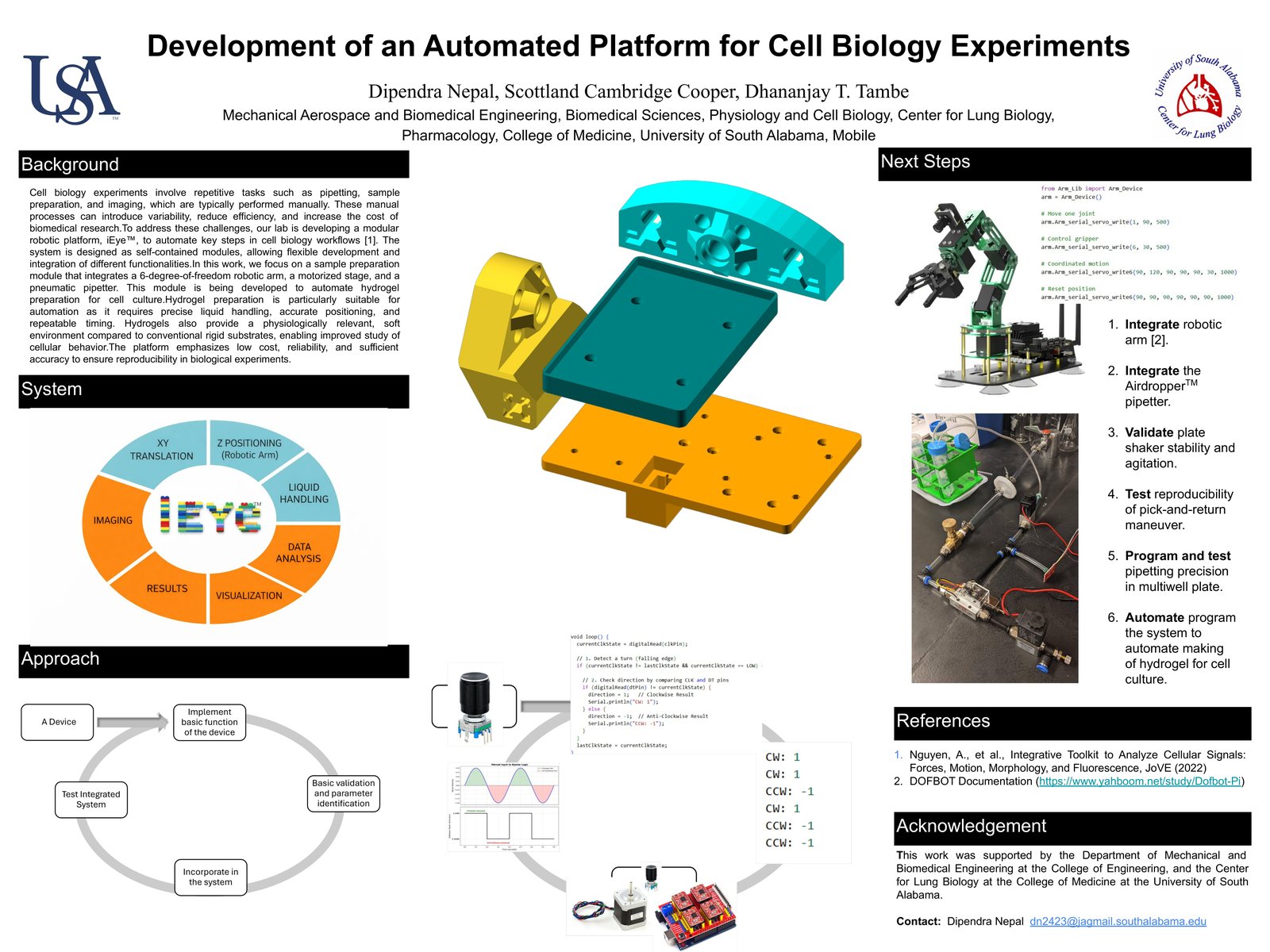
My MS thesis is a positioning platform for automating repetitive laboratory handling. The task is a well defined motion problem: move a tip to an addressed well on a standard 96 well plate, descend, dispense, and repeat several hundred times without drift. Wells sit on a 9 mm pitch, so the accuracy the mechanism has to hold is a small fraction of that spacing across the full extent of the plate. Doing it by hand is slow and consistency degrades as the operator tires; the platform is the hardware that removes the operator from the loop.
The work sits inside a larger modular system our lab is building, iEye, which is organised as self contained modules — XY translation, Z positioning, liquid handling, imaging, and data handling — so that each can be developed and swapped independently. My module is sample preparation: a motorised stage, a six axis robotic arm, and a pneumatic pipetter working together. I presented this work as first author at the 2nd Annual Shelby Hall Graduate Research Forum at the University of South Alabama, with Scottland Cambridge Cooper and Prof. Dhananjay Tambe; the poster is archived in the university repository at JagWorks@USA. The work is supported by the Department of Mechanical and Biomedical Engineering and the Center for Lung Biology.
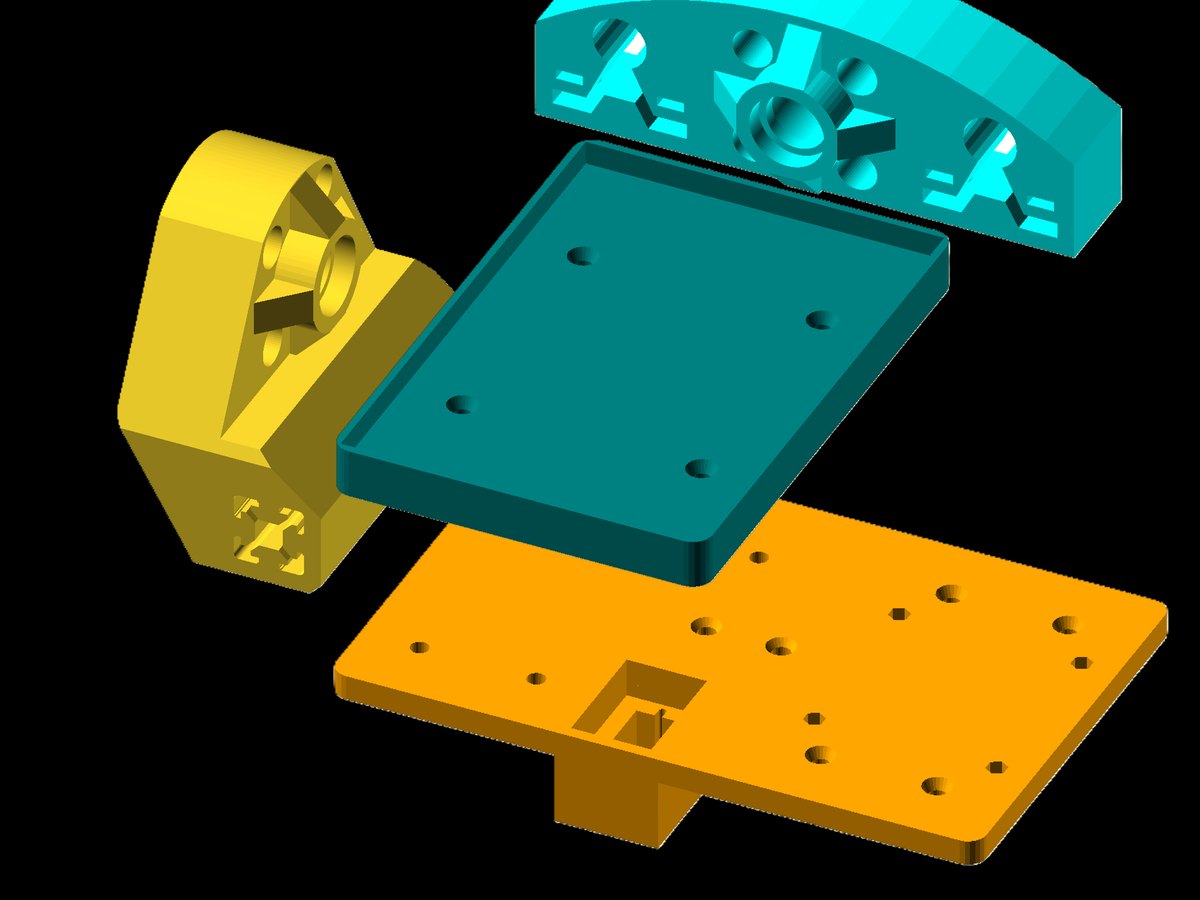
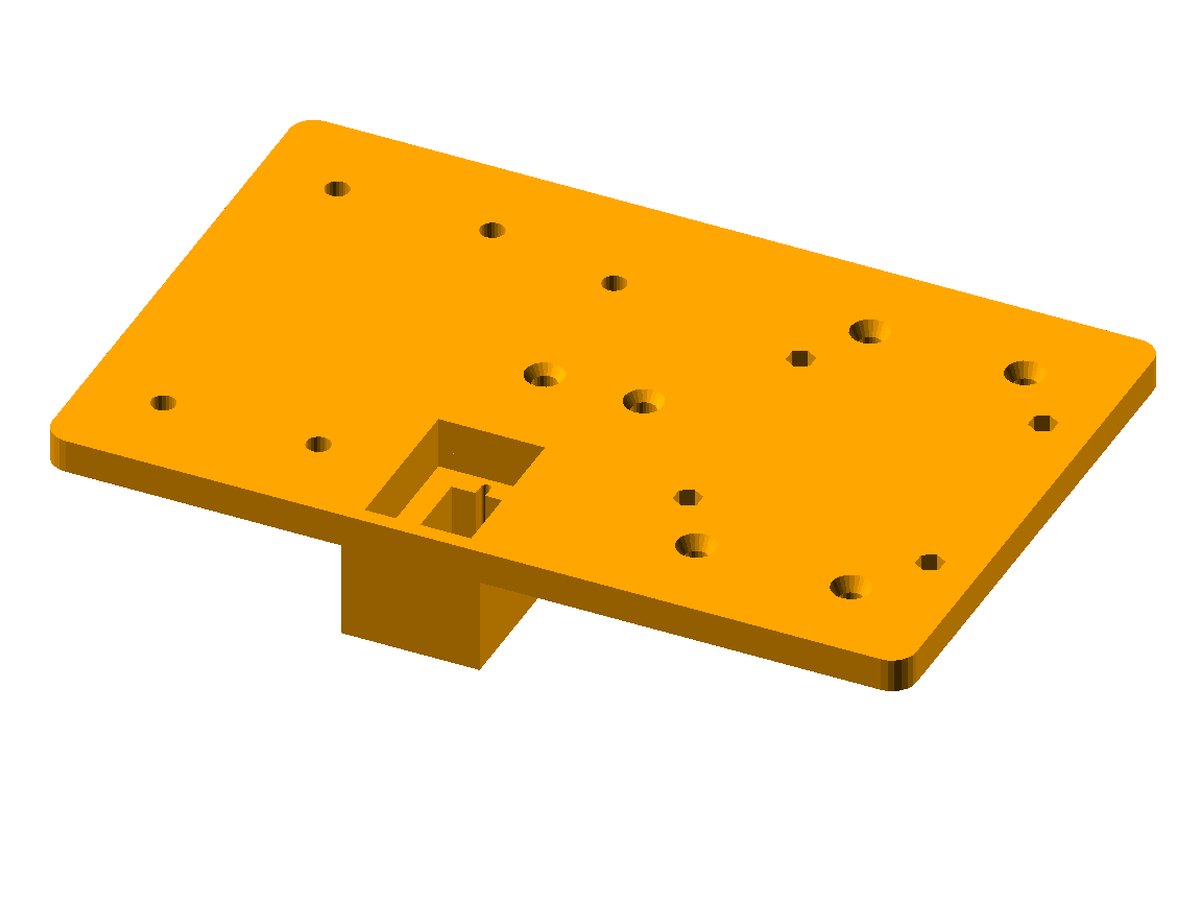
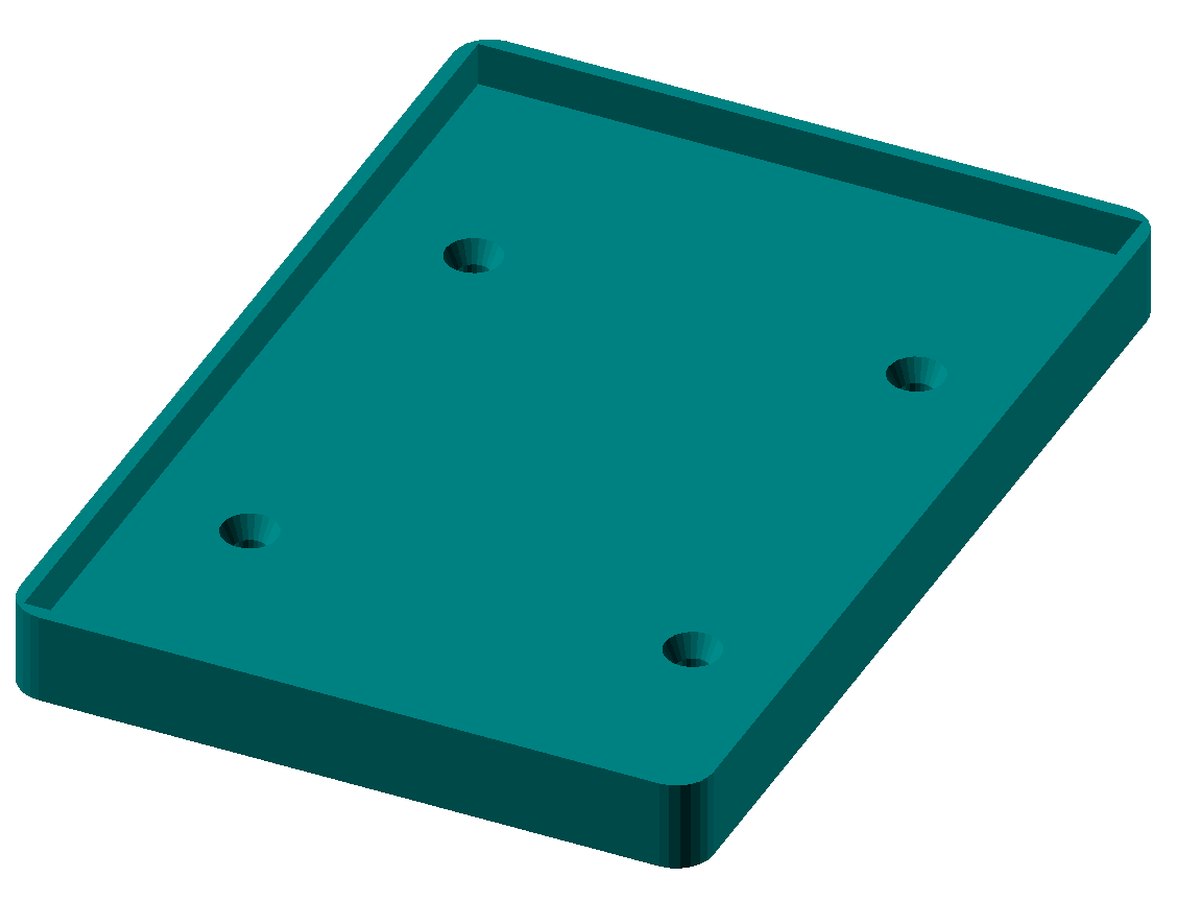
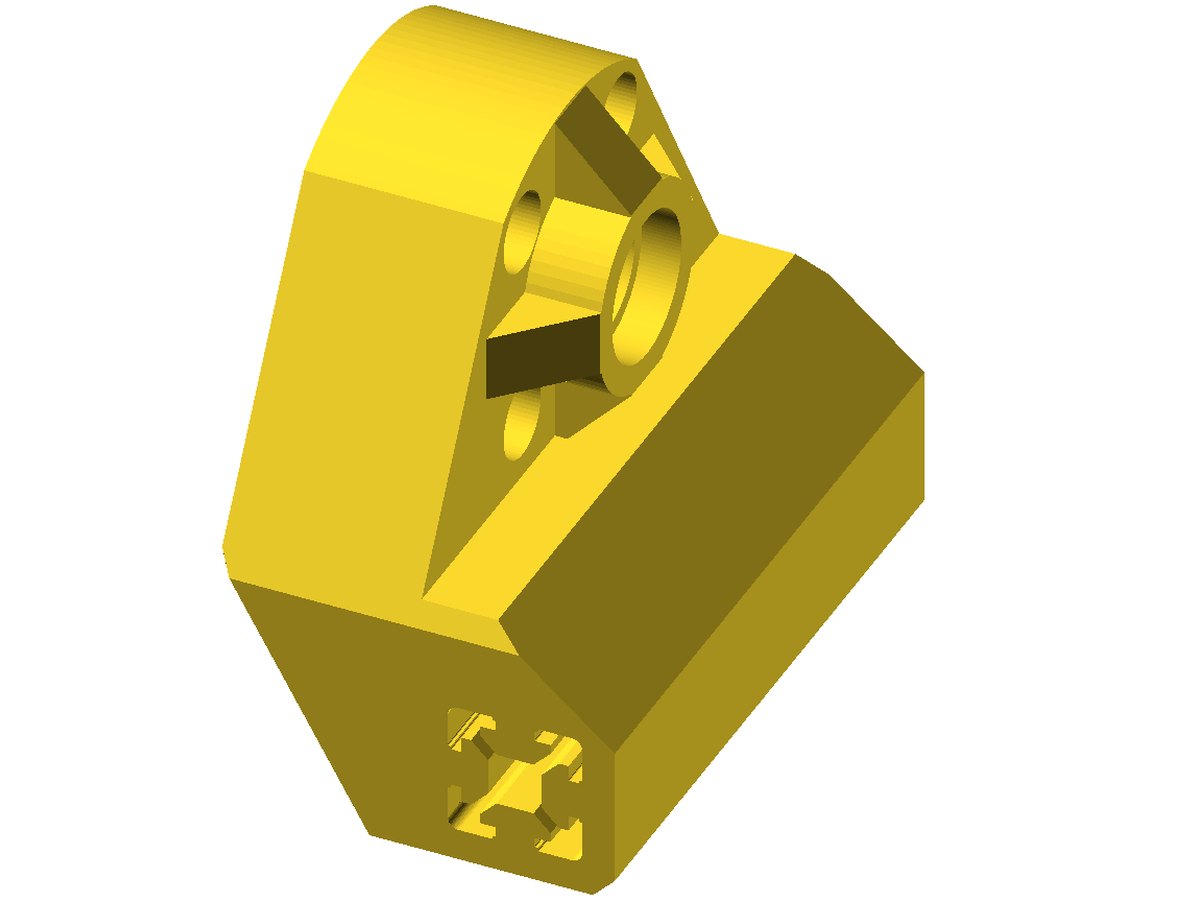
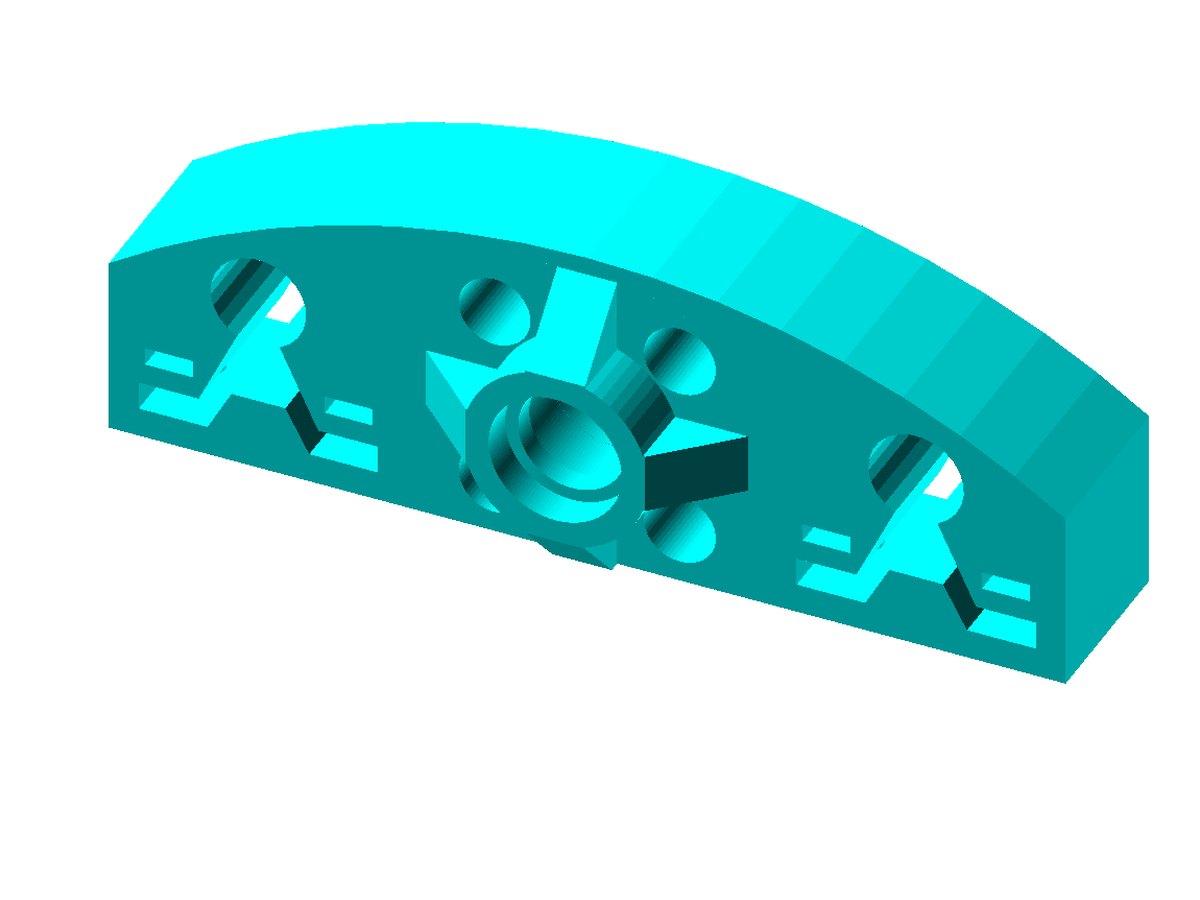
The parts shown above are the stage and plate fixturing I designed and printed. A base plate carries a pocket that receives a recessed carrier plate, which in turn locates the plate at a known position. Two bracket types clamp the aluminium extrusion rails that form the frame: one takes a single rail, and the curved hub takes two, holding them at a fixed included angle.
Fixturing sounds like the trivial part of a precision instrument and is not. Every position the system reaches is measured relative to the plate, so any looseness or ambiguity in how the plate seats propagates directly into positioning error. The pocket has to locate the plate repeatably without needing force to seat it, and the brackets have to constrain the extrusion in every direction that matters while still printing without support.
Alongside the thesis I completed a directed independent study on precision mechanisms, working through a magnetically geared delta stage and then a five bar parallel pantograph. In a five bar linkage, two motors fixed at the base drive four coupled links meeting at the end effector. Neither motor rides on the moving structure, so the arms carry no motor mass, and the linkage geometry acts as a reduction between motor rotation and tip travel — a given angular resolution at the motor produces a much finer displacement at the tip. The link design is covered in detail on the five bar pantograph page.
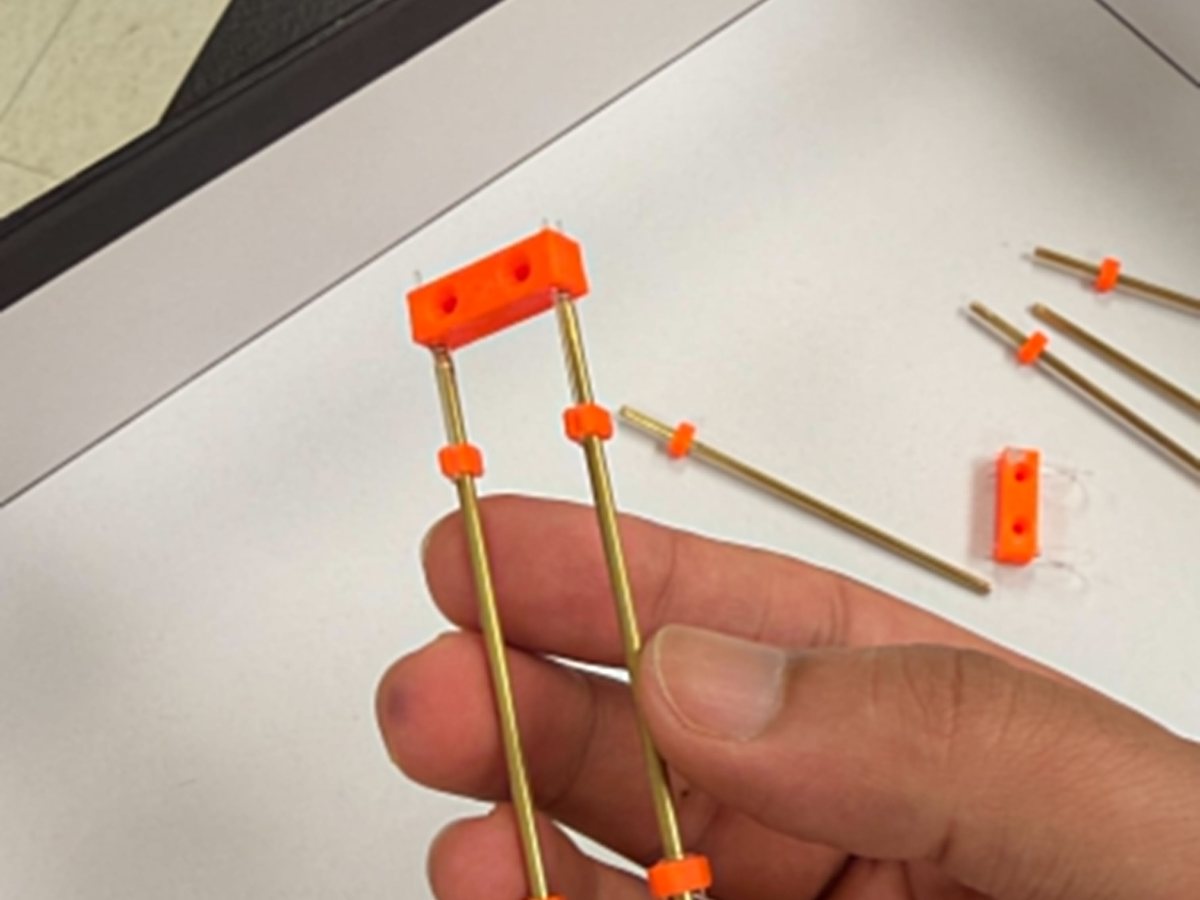
Each of the four links is built as a pair of pieces, eight printed parts in total, with the pivot bosses offset toward the touching faces. A single piece link runs out of travel when the pivots collide before the workspace is swept; splitting each link and offsetting the bosses clears that interference and allows the mechanism through its full range. The links also carry five Chicago screw positions along their length, so effective link length can be changed between tests without reprinting.
My advisor's view is that the two strands are stronger together: the platform gives the automation a real application, and the pantograph gives it resolution a conventional stage would not reach. Integrating them is where the work is heading — closed loop steppers with absolute encoders on a shared CAN bus for the plane of the plate, and a voice coil for vertical motion, mounted on the frame the printed fixtures carry.